
HomeBuddy Assistive Tech
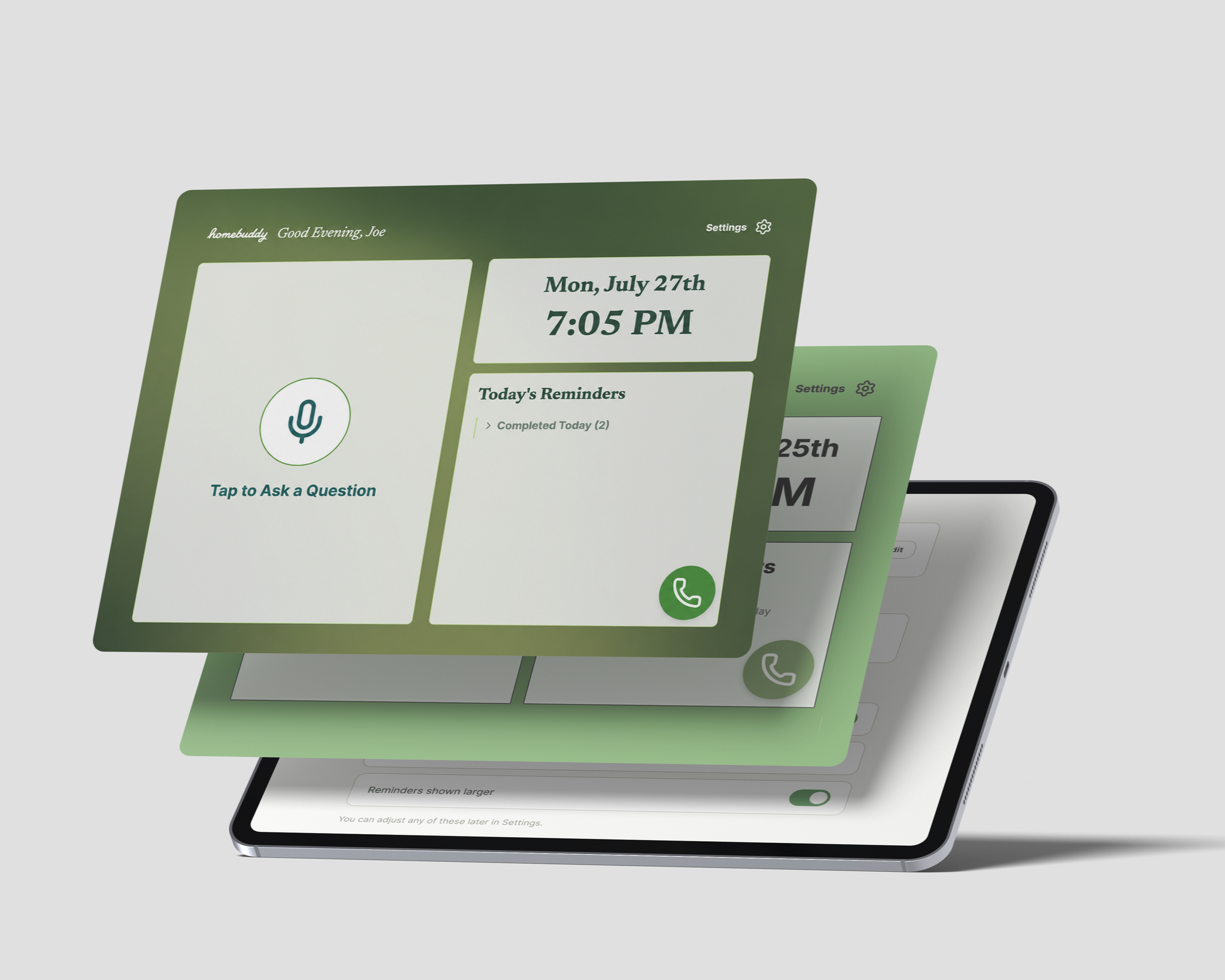
HomeBuddy is a solo capstone project built around WCAG 2.1 AA accessibility from the ground up.
Every design decision, from 64px touch targets to audio-first interaction, was made with older adults' real needs in mind.
Designed, researched, and built independently across three rounds of user testing.
Problem
-
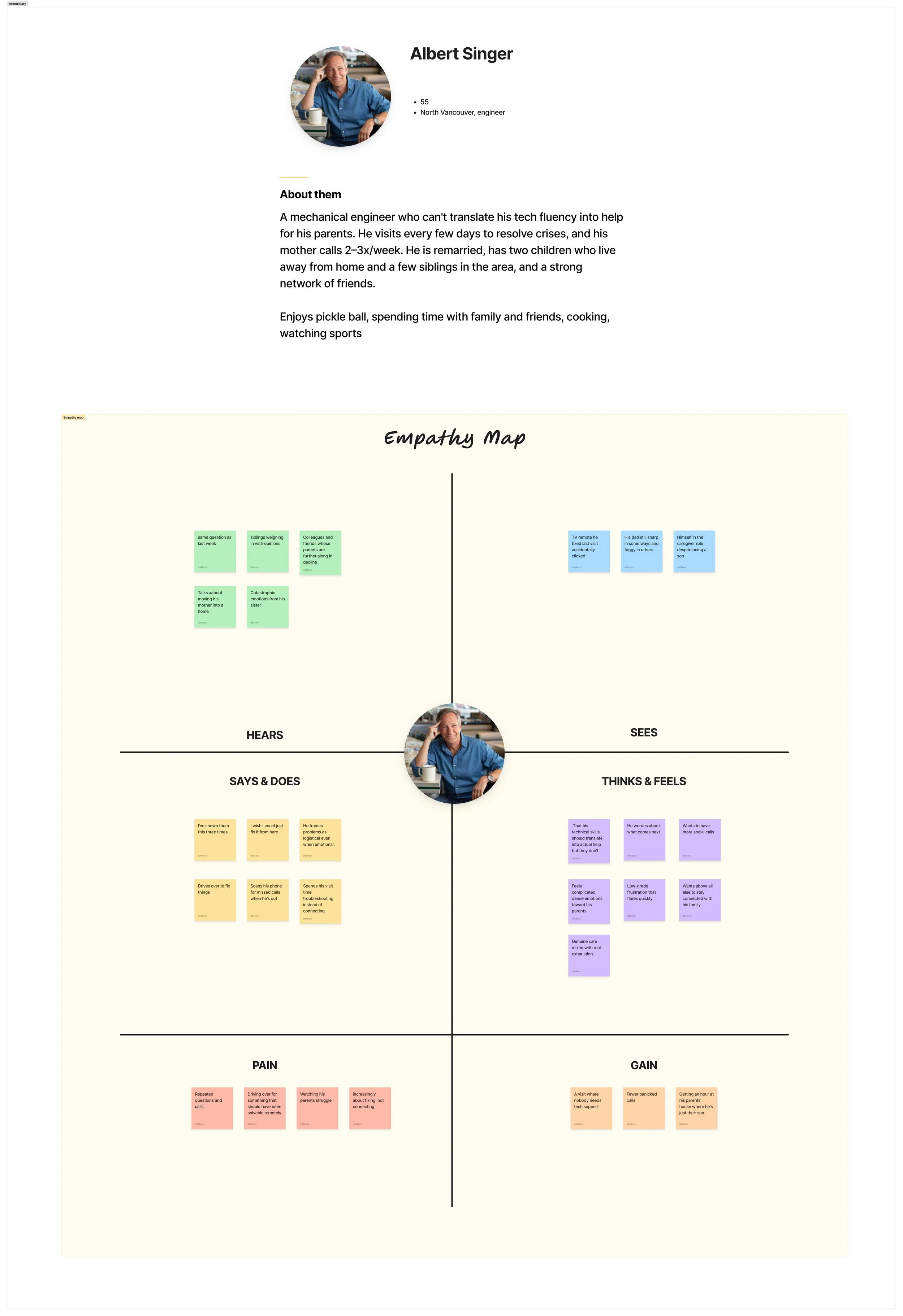
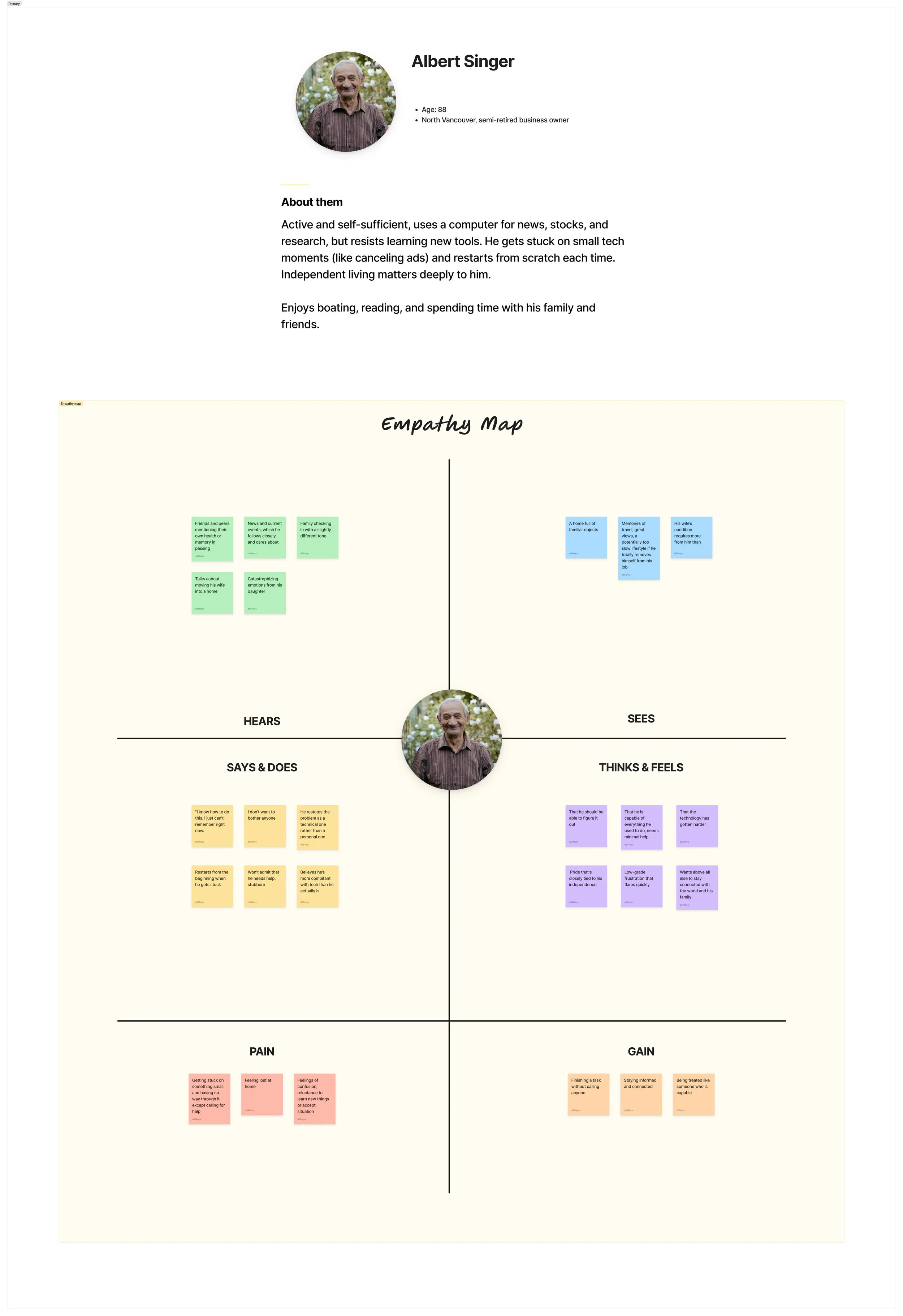
Older adults run into the same wall over and over: everyday tech tasks like changing a channel, sending a text, or using a new appliance become sources of frustration and dependence.
Family and caregivers end up fielding the same questions again and again, whether that's a daughter on the phone or a paid helper making a trip to the house.Neither side has a good way to close that gap without someone hovering.
Research
-
Research was conducted in three stages to better understand both the problem and the people it affects.
The first stage consisted of discovery interviews with Gabby and Gianfranco Merletti, focusing on daily routines, technology use, and common frustrations experienced by older adults. These conversations helped identify recurring patterns around memory, confidence, and the desire to remain independent.
The second stage involved usability testing with six Vancouver Film School Interaction Design students. This round focused on evaluating the prototype's navigation, clarity, and overall interaction flow before introducing it to the target audience.
The final stage was conducted with eight residents at Providence Living in Vancouver. Observing older adults use the prototype in a real-world setting revealed challenges that weren't apparent during earlier testing, particularly around reading, navigation, and cognitive load. Their feedback became the primary driver for the final interaction model.
Early Process
-
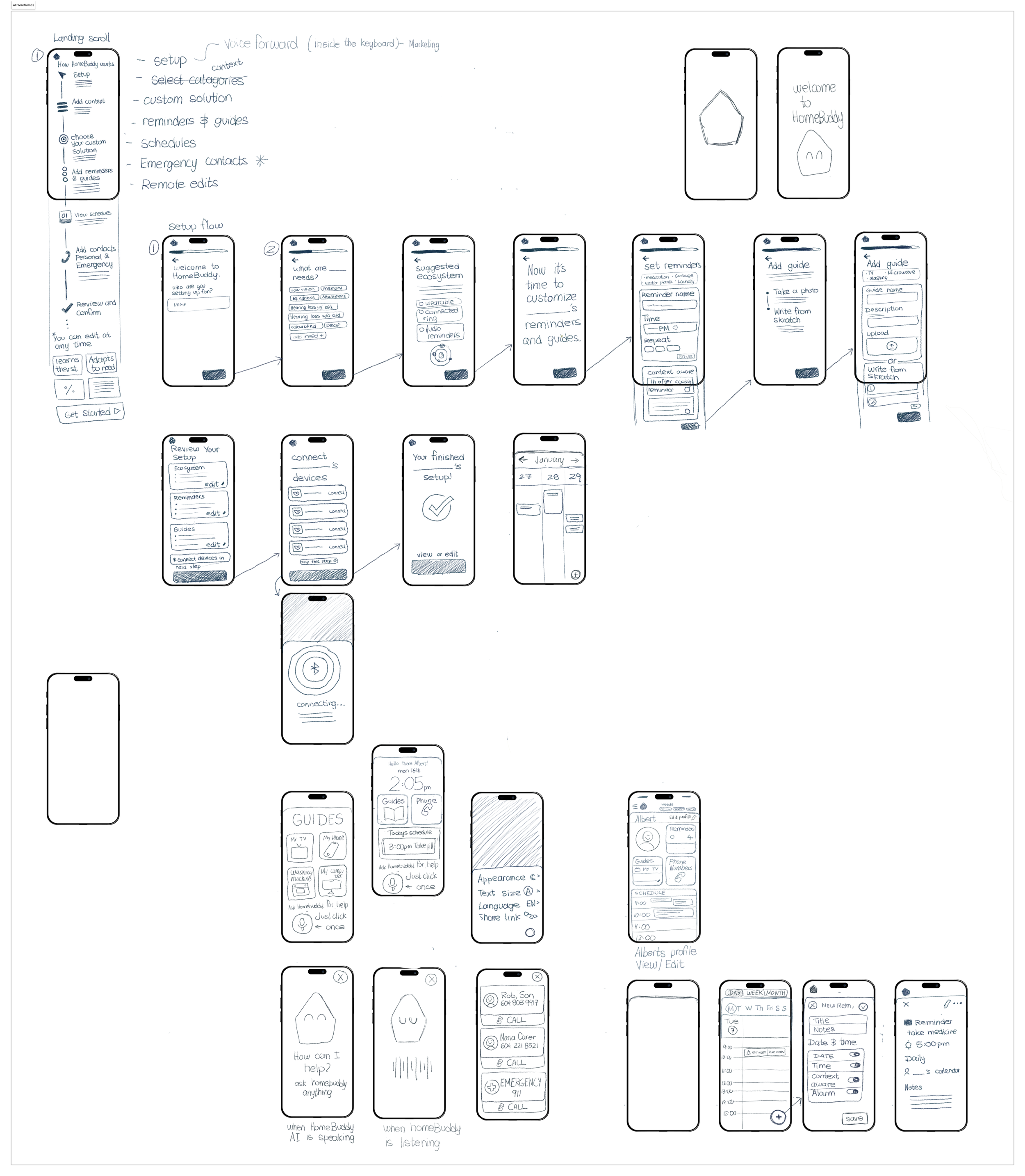
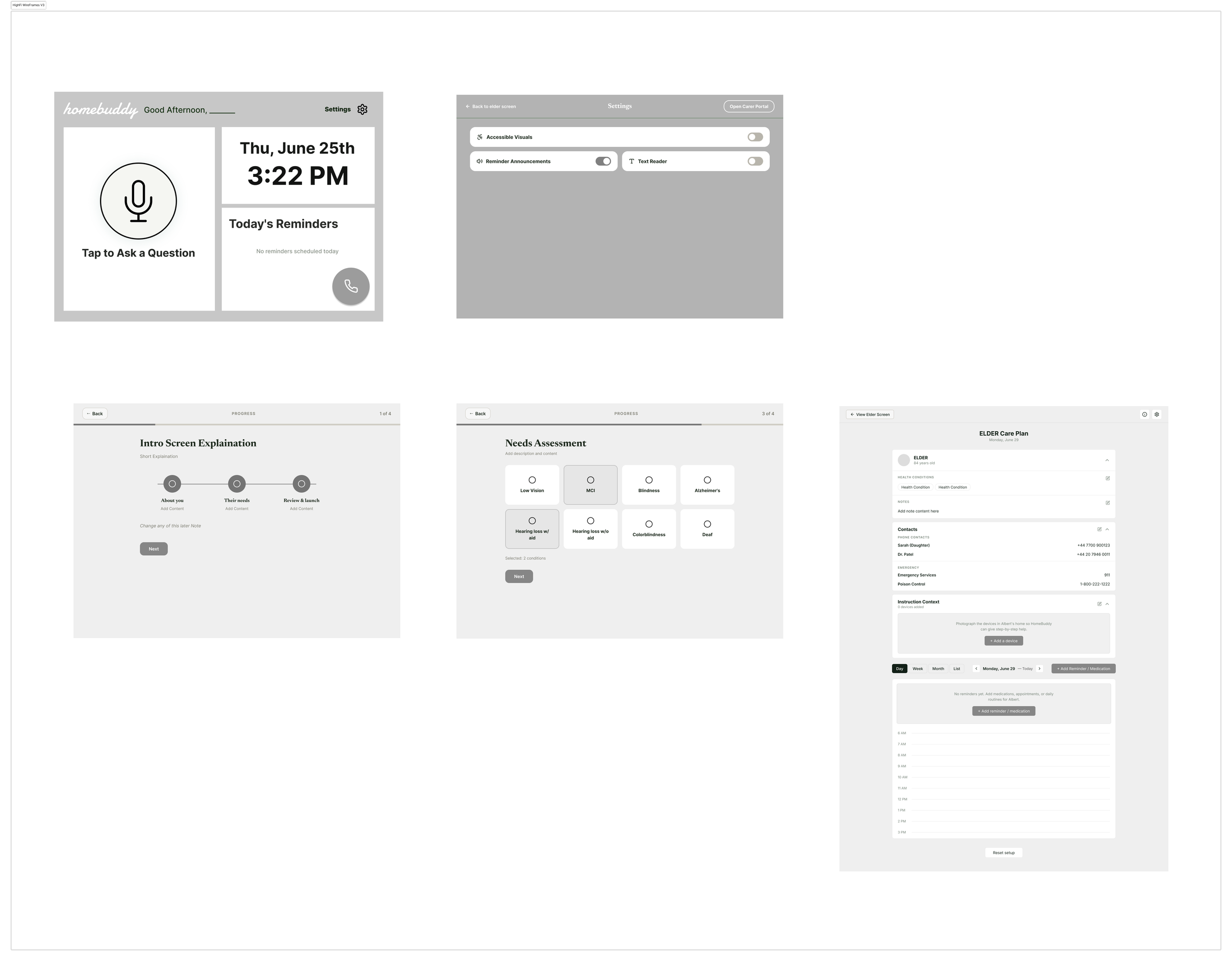
The product was designed with pencil and paper, then in Figma before being developed as a functional prototype using Lovable and the Anthropic API. Each research stage directly informed the next design iteration, allowing the interface to evolve through continuous testing and refinement.
Feedback from Providence Living proved especially influential. It shifted the experience toward an audio-first interaction model with fewer decisions, simplified navigation, and a stronger focus on guiding users through one clear action at a time.
Findings
-
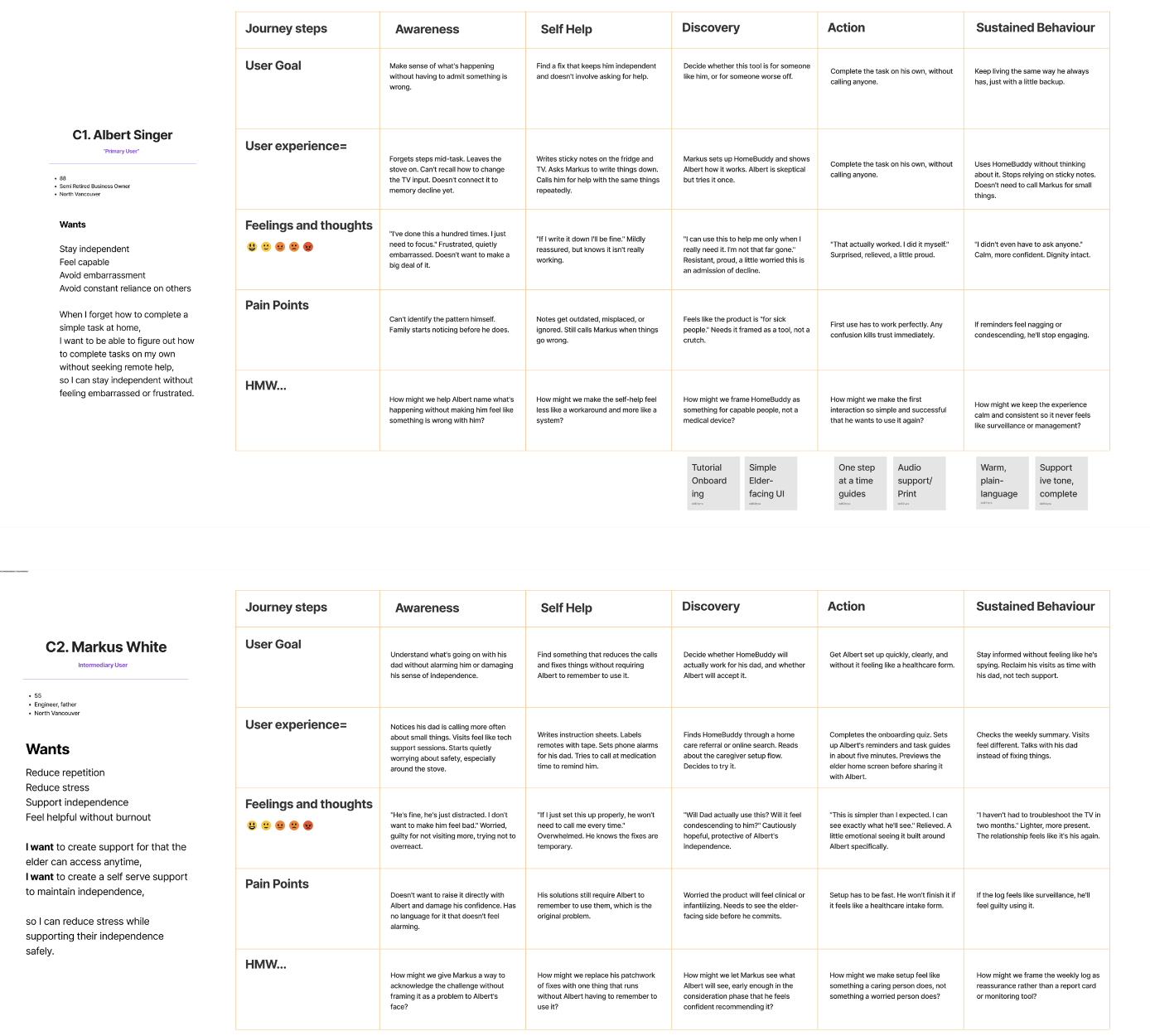
Across all research stages, one insight remained consistent: older adults want to maintain their independence, not rely on someone else for every task. However, many participants lost their place during multi-step processes and became frustrated when they had to restart.
Caregivers described spending a considerable amount of time repeating the same instructions, whether over the phone or in person. Both groups consistently responded better to experiences that reduced complexity. Simpler interfaces, fewer choices, and clear step-by-step guidance produced the highest confidence and task completion rates.
Solutions & Design Decisions
-
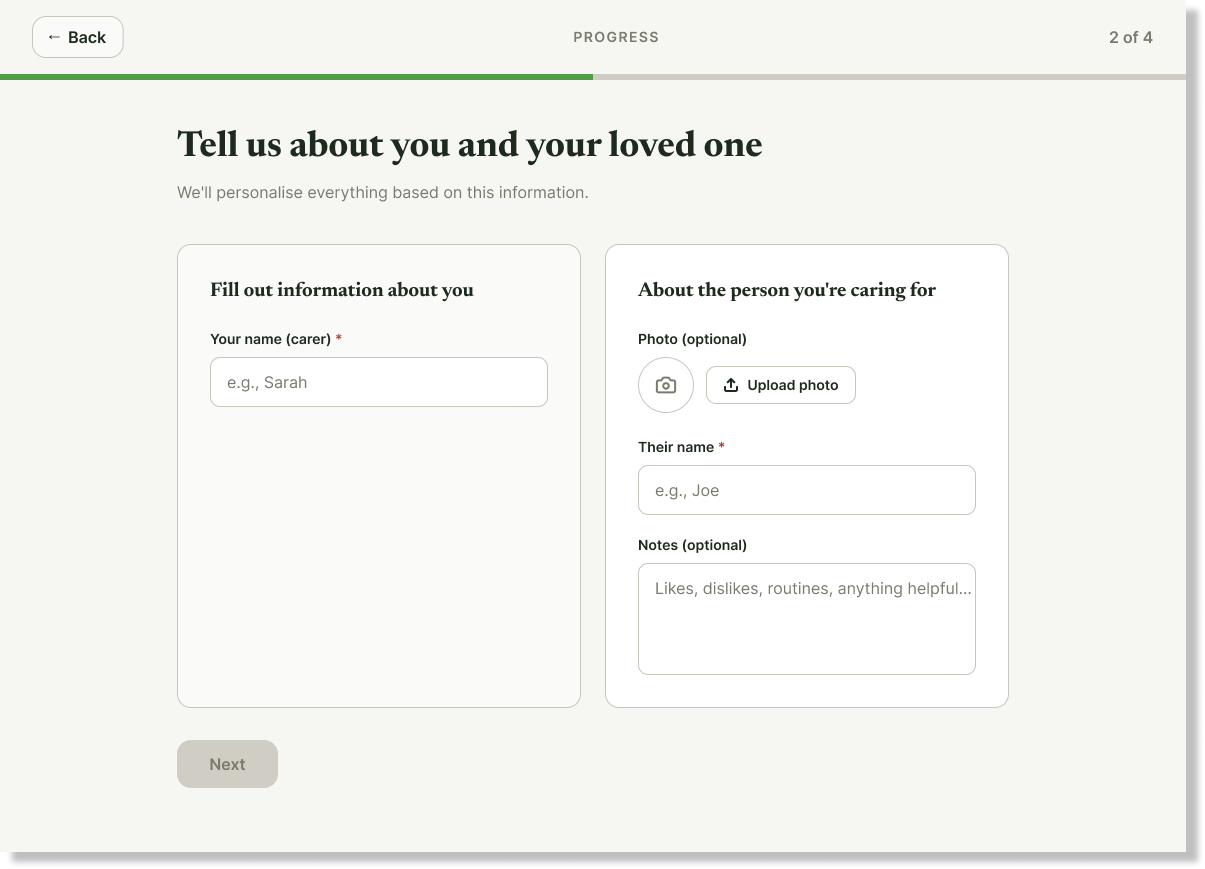
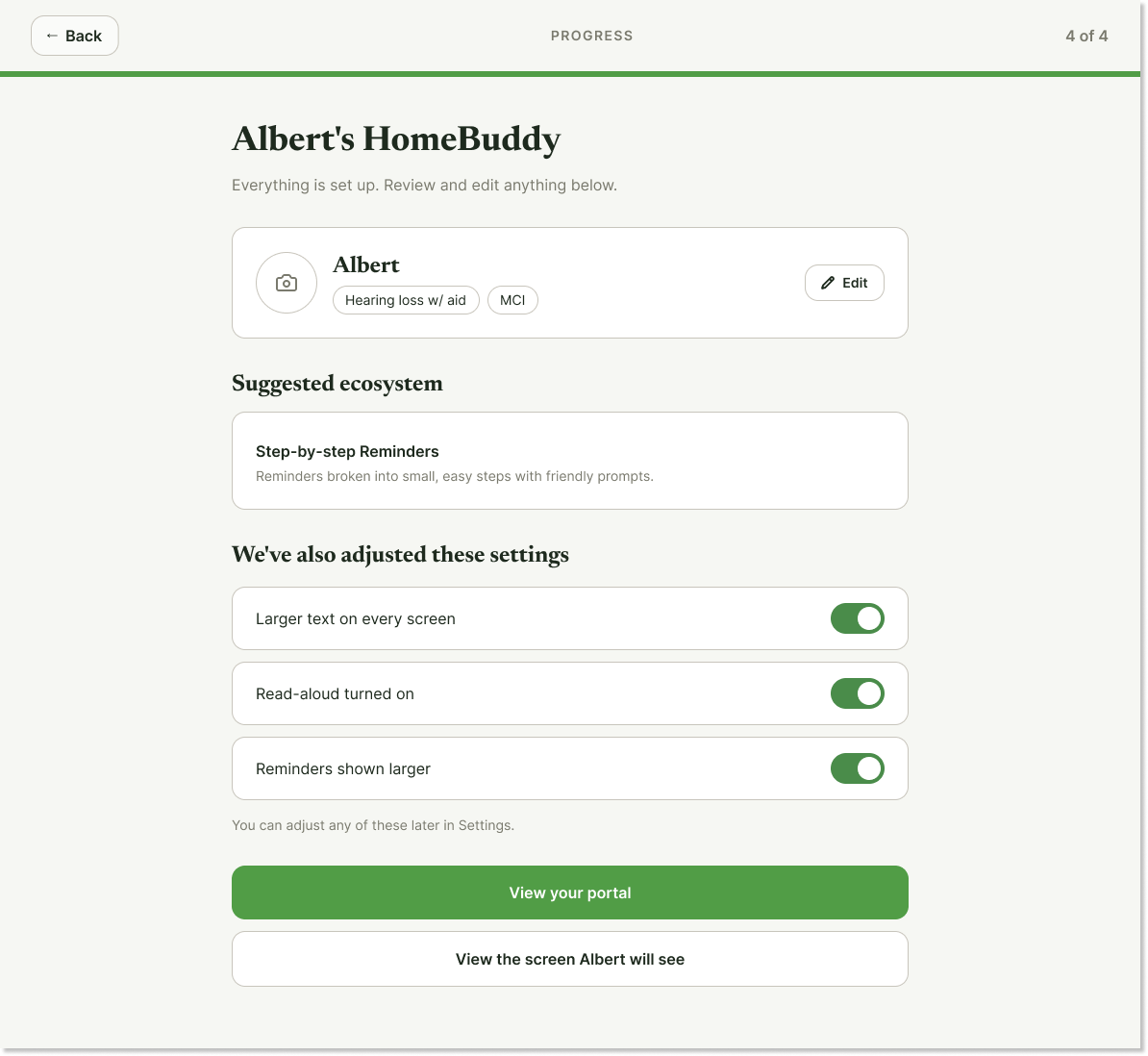
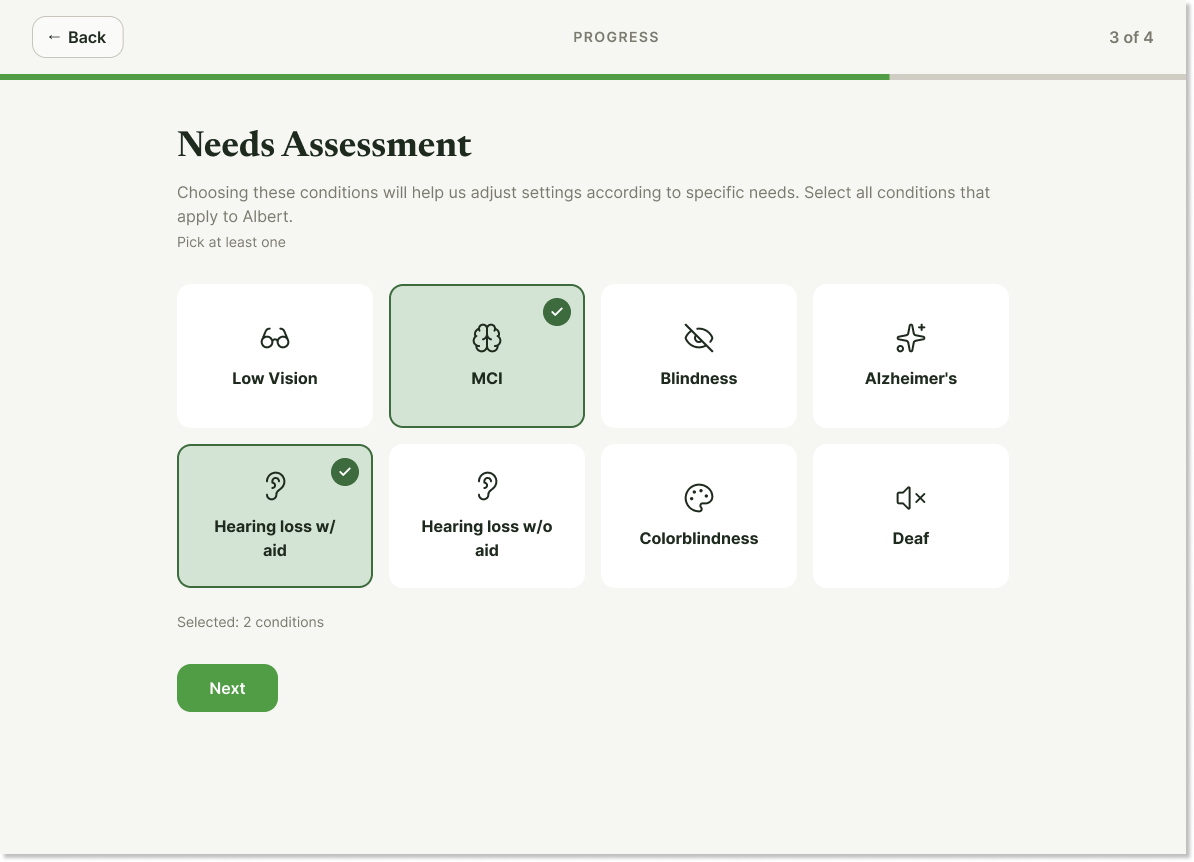
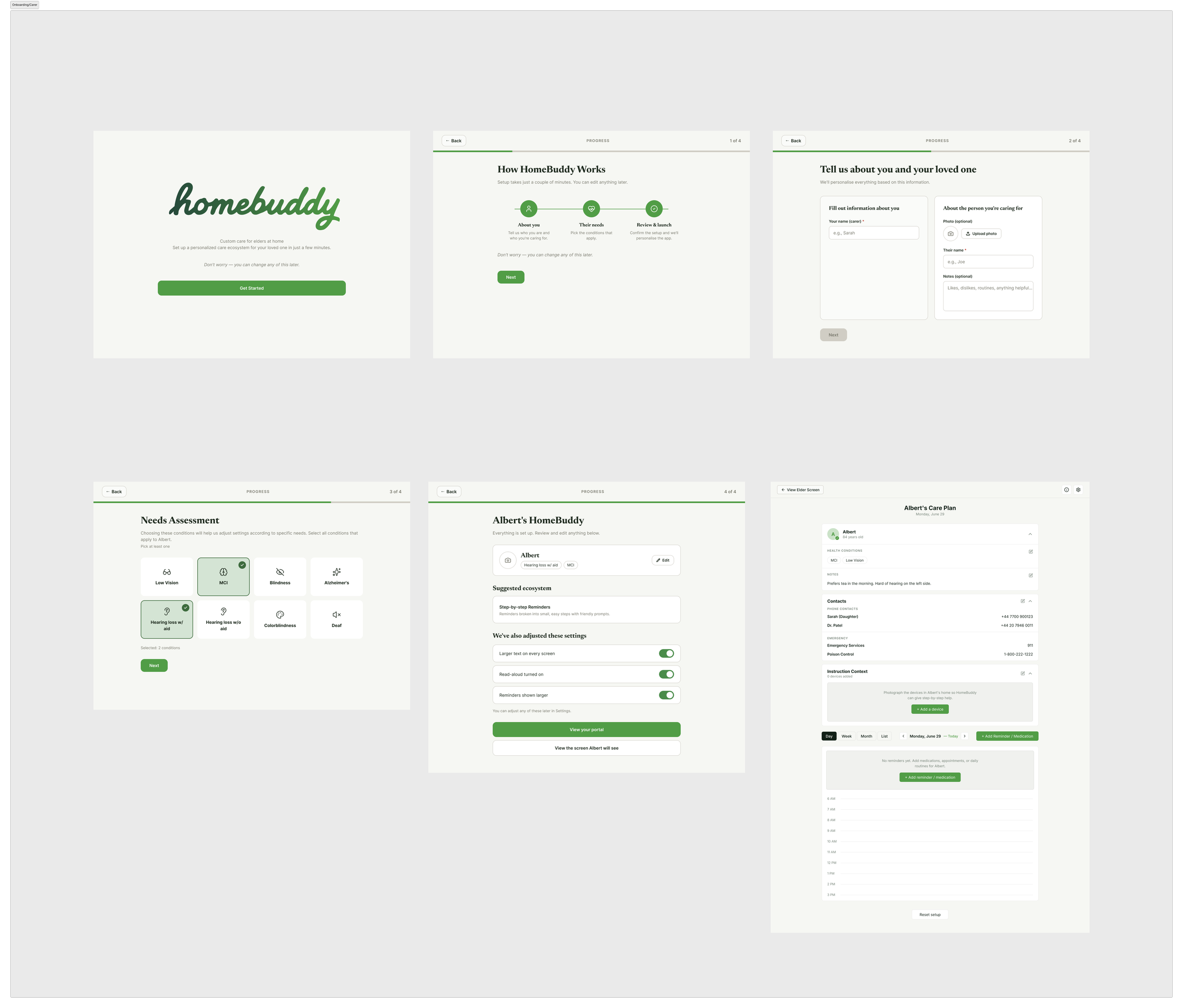
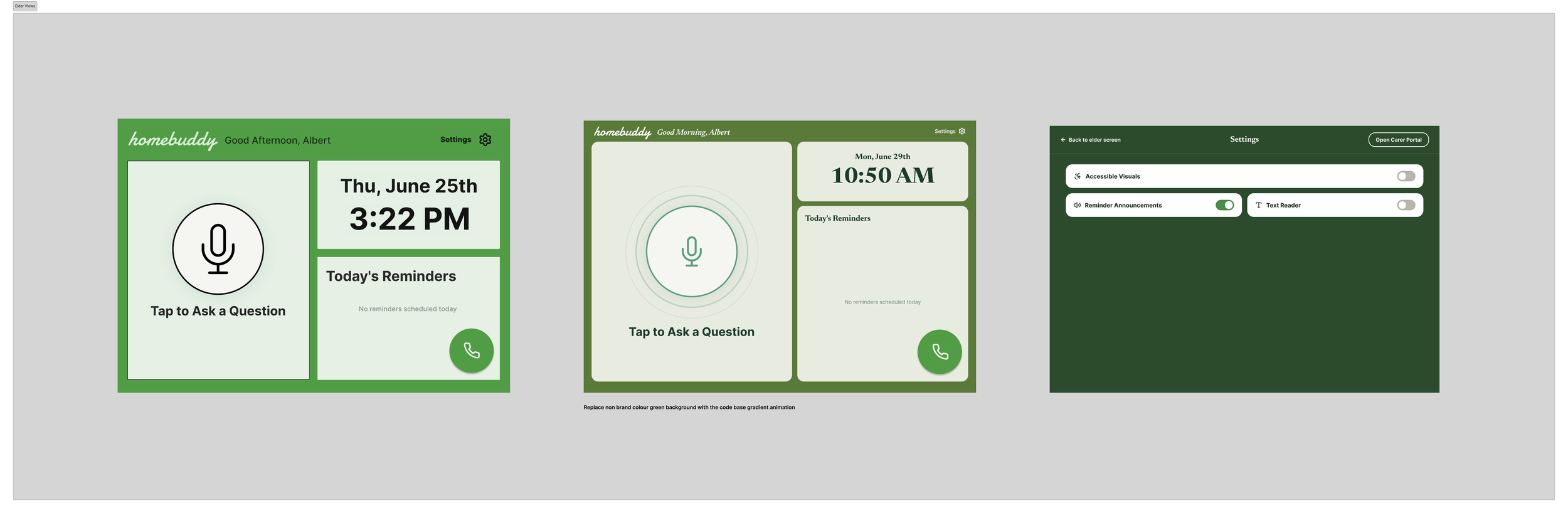
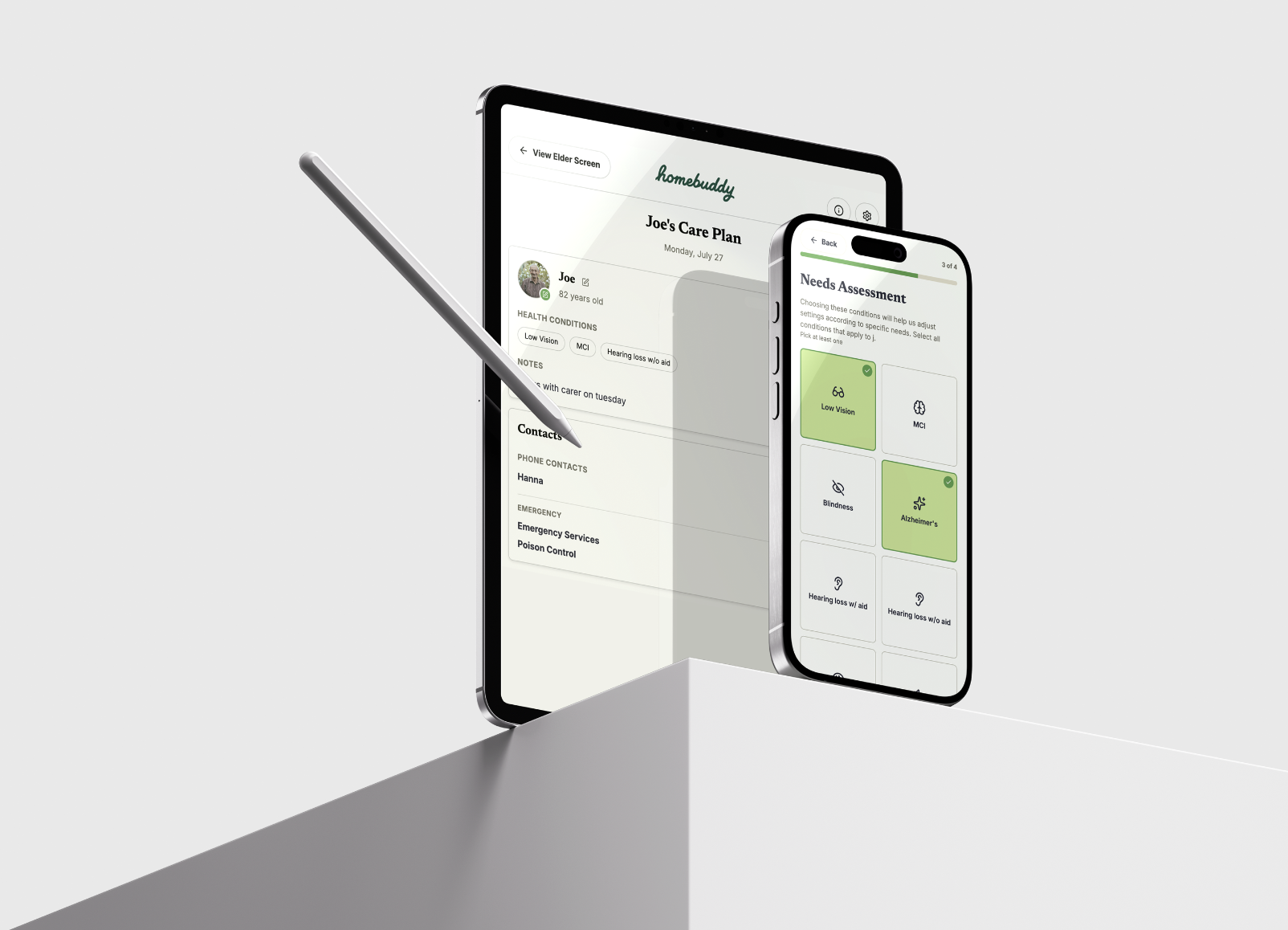
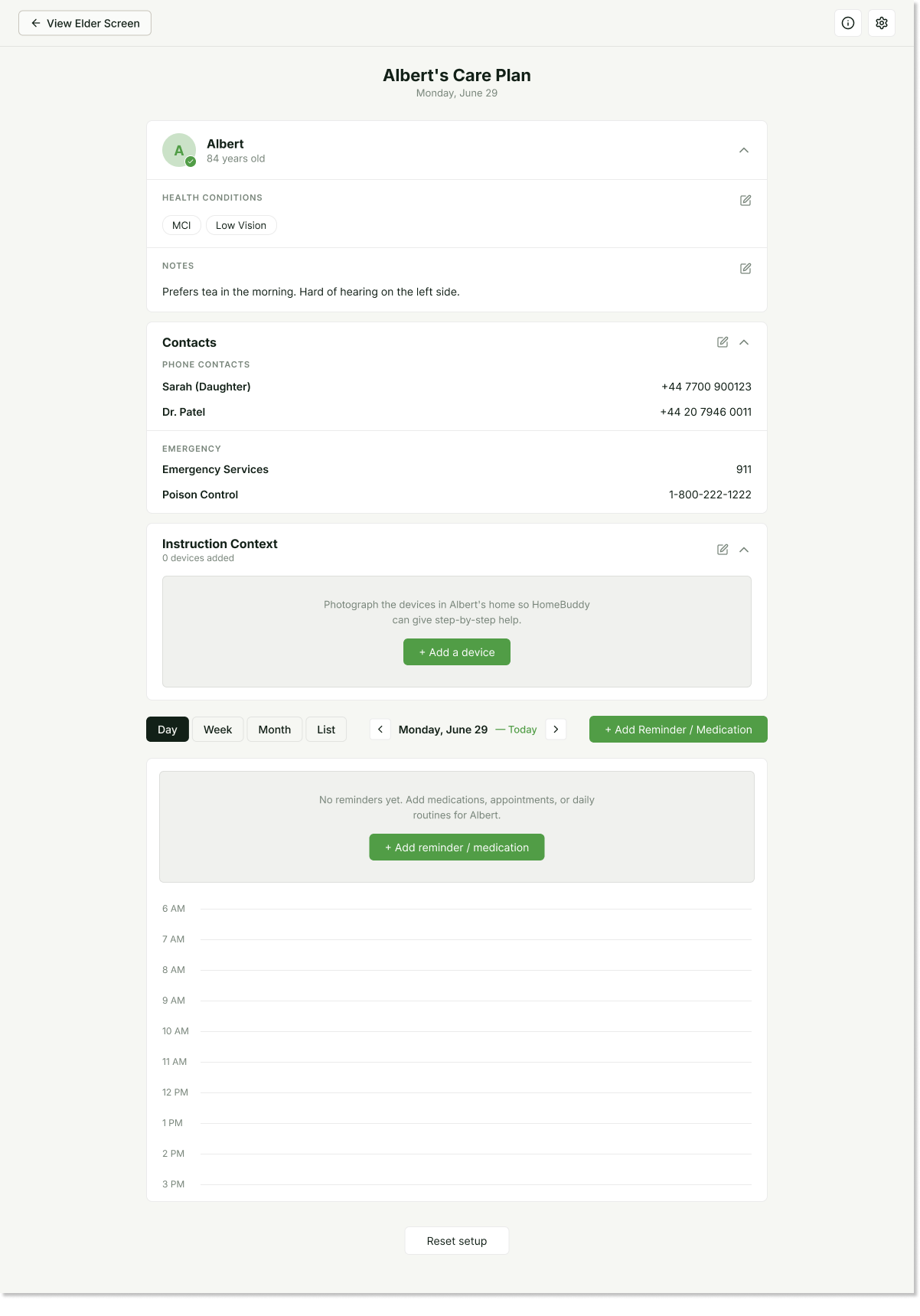
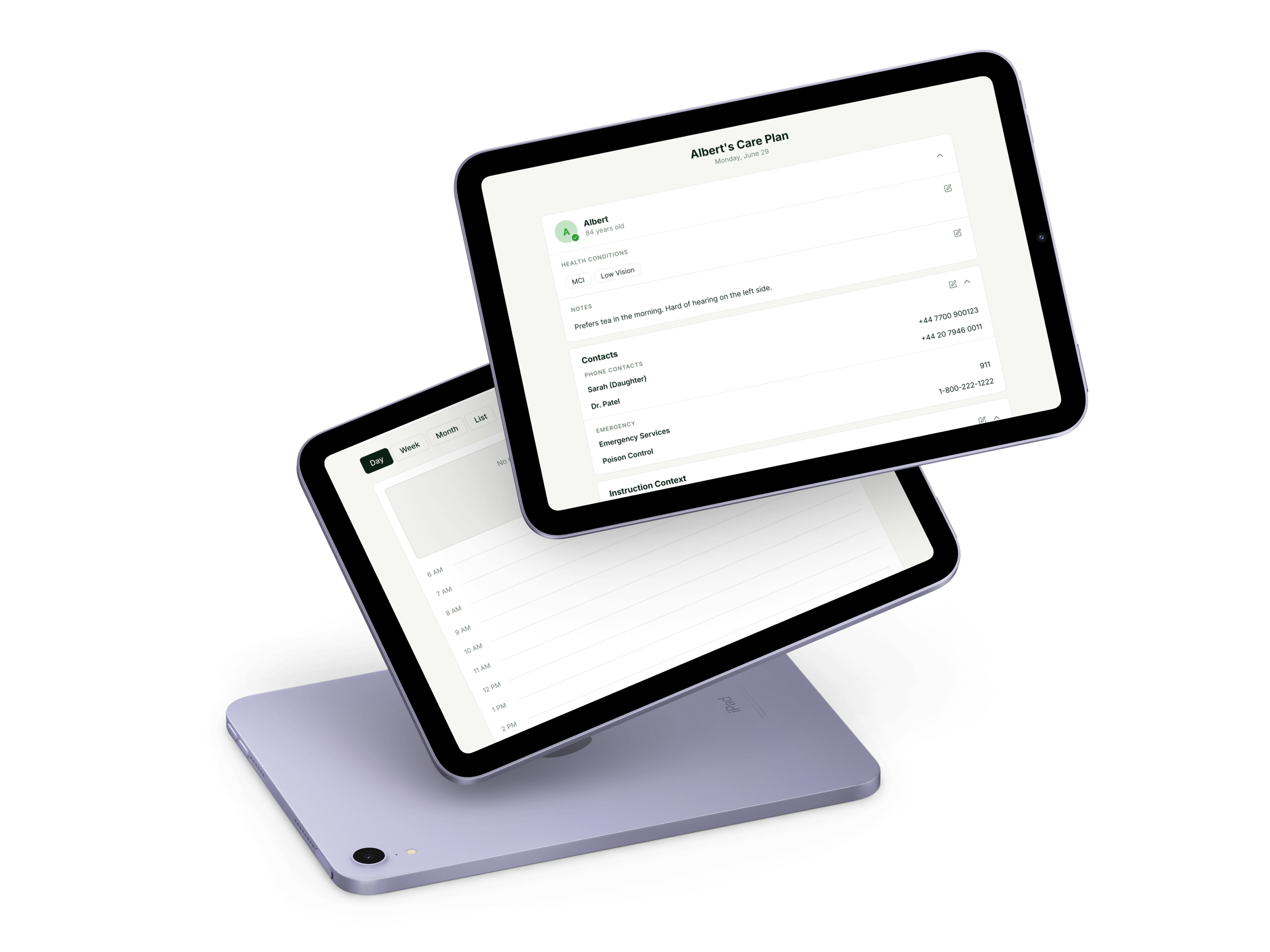
HomeBuddy is designed around two connected experiences: an elder-facing assistant that provides step-by-step guidance, and a caregiver Helper Portal where setup happens once before being handed off.
Rather than relying on generic instructions, caregivers upload photos of the actual devices in an older adult's home. HomeBuddy uses those images to generate personalized guidance that matches the appliance directly in front of the user, reducing confusion caused by differences between models.
The interface follows progressive disclosure, presenting only one step at a time with plain language, large touch targets, and integrated voice guidance. Accessibility considerations throughout the experience align with WCAG 2.1 AA standards.
The design is guided by three core principles: quietly present, dignity over efficiency, and simplicity over completeness. These principles informed every major design decision, ensuring the product supports independence without overwhelming its users.
Conclusion
-
Learnings
HomeBuddy demonstrated that accessibility extends beyond larger text and higher contrast. Through multiple rounds of user research and iterative testing, the project evolved into an experience that prioritizes confidence, independence, and dignity for older adults while reducing the repetitive burden placed on caregivers.
The final prototype validated that thoughtful interaction design, grounded in real user feedback, can make everyday technology more approachable and empower people to remain independent in their own homes for longer.Promotion
The final deliverable included a promotional video designed to communicate both the problem and the product to a broad audience. Rather than focusing on technical features, the video centered on the emotional experience of aging, the growing responsibilities of caregivers, and how HomeBuddy fits naturally into that relationship. Storyboarding, scripting, motion design, and editing were used to simplify a complex product into a clear, accessible narrative that could be understood in under a minute.