
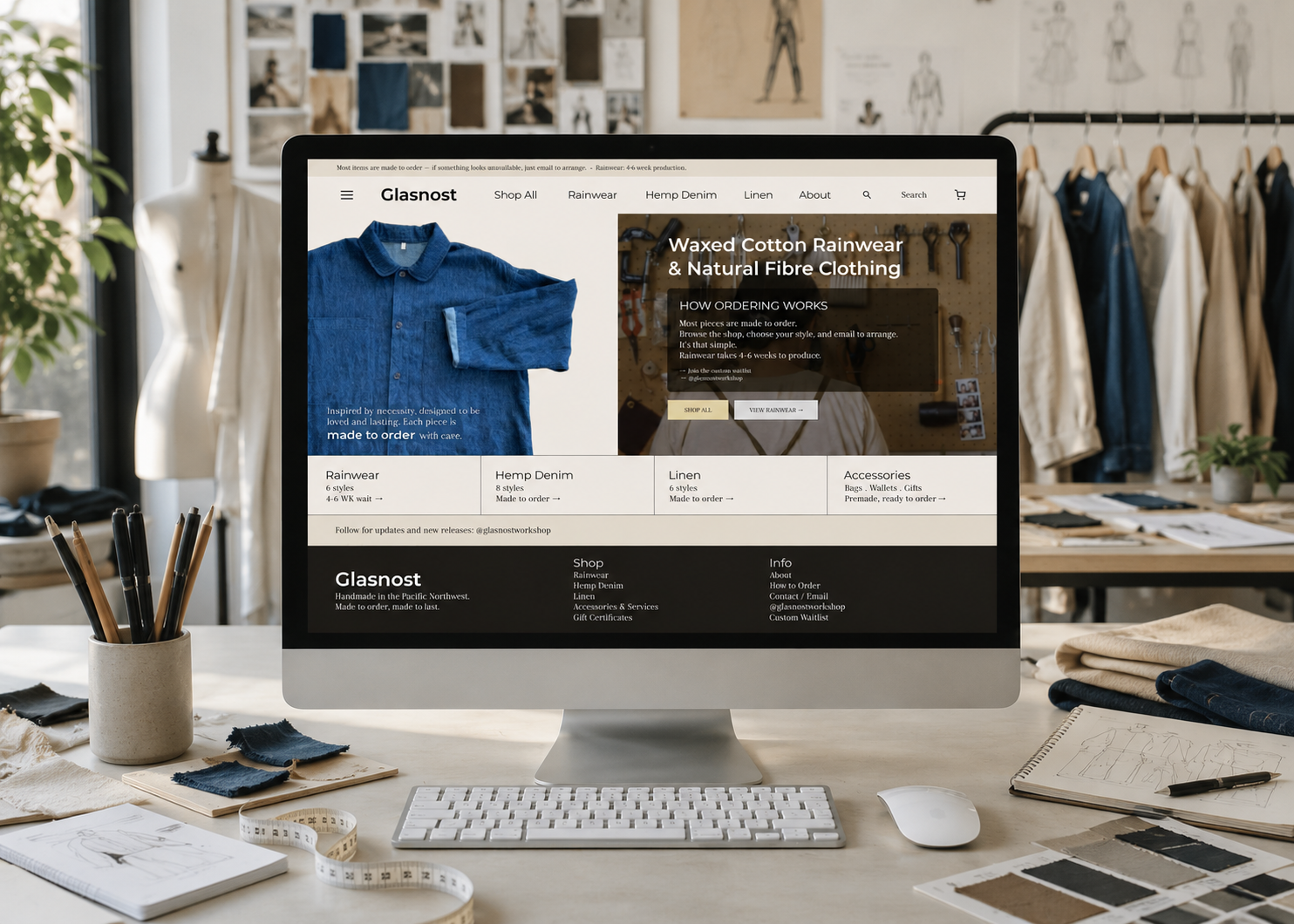
Glasnot Ecom Shop Redesign
Glasnost crafts handmade waxed cotton rainwear out of Vancouver, BC. The clothing is exceptional in quality and craftsmanship, but their website was working against them.
Users were getting lost, confused, and leaving before they ever made a purchase. I was brought in to simplify the buying flow and create a shopping experience that matched the quality of the product itself.


-
The homepage dropped visitors directly into a product grid with no orientation, no brand story, and no explanation of how ordering actually worked. For a brand where most items are made to order, this was a significant gap. Customers had no way of knowing that ordering meant waiting 4–6 weeks, or that "sold out" items could still be requested via email. Without that context, the site felt incomplete at best and untrustworthy at worst.
The lack of onboarding meant users were being asked to commit to a purchase before they understood what they were committing to.
-
The process began with a heuristic evaluation, which surfaced three core issues that were creating friction across the entire shopping journey:
No category structure in the navigation The shop was a single, undifferentiated grid mixing rainwear, linen garments, and hemp denim with no visual or navigational separation. Users had no way to browse intentionally.
No ordering context before the browse There was nothing on the homepage or shop landing that explained the made-to-order model. Users were forming expectations that the site couldn't meet, leading to confusion and cart abandonment.
Production timelines appearing too late in the flow Wait time information only surfaced deep in the product pages, long after a user had already built intent to buy. By the time they saw the 4–6 week lead time, it felt like a surprise rather than a feature.
Together, these three gaps created a compounding experience of confusion, each step in the funnel left users with more questions than answers.
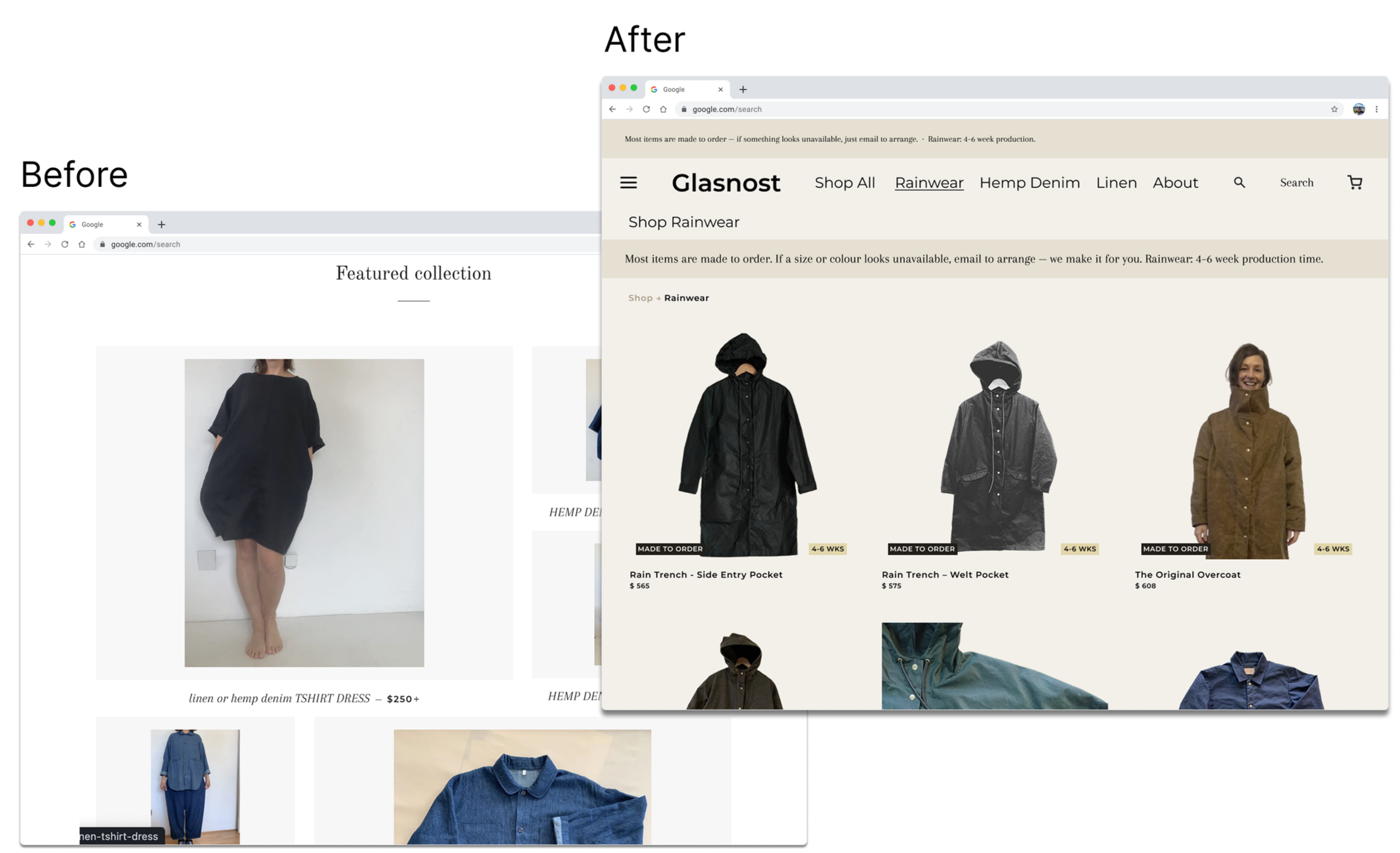
Glasnot Shop Redesign
Glasnost makes handcrafted waxed cotton rainwear out of Vancouver. The clothes are exceptional, but the website was confusing to it's users.
-
The evaluation was structured around Nielsen's 10 usability heuristics and identified three critical violations:
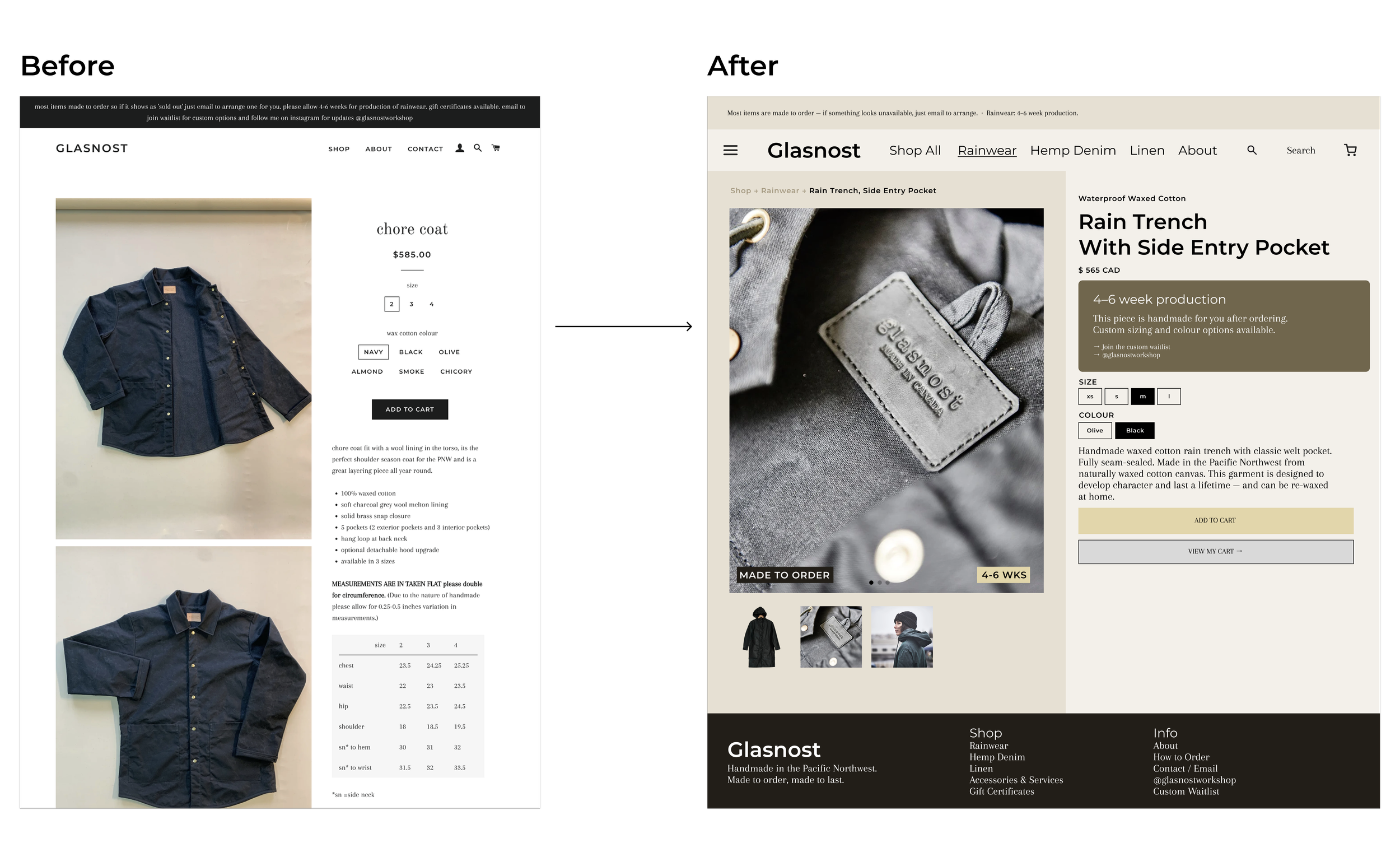
1. Critical ordering information buried in a marquee banner (Visibility of System Status) The 4–6 week production wait and the "email us if it shows sold out" policy were tucked into a scrolling marquee at the top of the page — easy to miss, impossible to recall. Users had no persistent, legible reference for how the ordering system worked.
2. No navigation categories (Match Between System and the Real World) The only navigation option was a single "Shop" link, which deposited users into a flat grid mixing rainwear, linen, and hemp denim together. There was no way to filter, browse by product type, or orient yourself within the catalog. The mental model users brought to the site — "I'm looking for a raincoat" — had no corresponding structure in the interface.
3. Product names that don't communicate what the item is (Recognition Over Recall) Titles like "linen or hemp denim TOPS," "linen or hemp denim BOTTOMS," and "linen PALAZZO JUMP" required users to already know the product catalog in order to parse what they were looking at. The naming conventions placed the burden of recognition on the user rather than on the design.
-
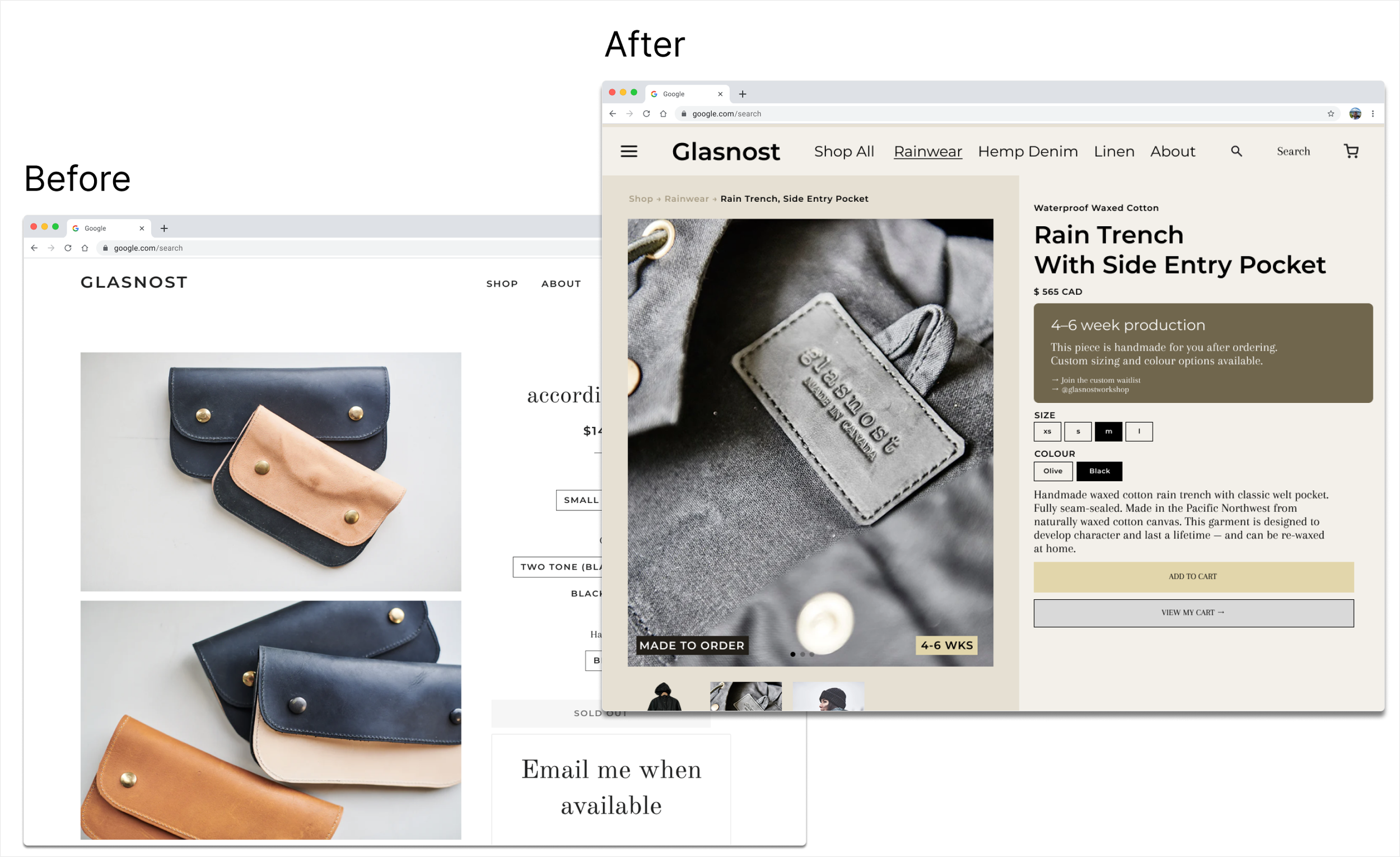
The most impactful design decision of the entire project was a simple one: lead with transparency. The original site buried the "made to order" policy in fine print at the bottom of product pages.
The redesign moved it to the hero, the very first thing a user sees. Every product card was updated to display a visible "Made to Order" badge, and wait times were surfaced prominently near the price on each product page. This shifted the framing entirely. Instead of discovering limitations mid-purchase, users understood the nature of the product upfront, which built trust rather than eroding it.
The goal wasn't just better conversion, it was fewer confused customers after the fact.
-
Three recurring themes emerged clearly from user interviews, each one mapping directly to the heuristic violations identified above:
"I didn't realize I had to email them. I thought it was just sold out."
"I wasn't sure if this was a raincoat store or a clothing store — there's just… everything on one page."
"I found the coat I wanted, but I have no idea how long it's going to take to actually get it."
These quotes confirmed that the confusion wasn't a matter of taste or aesthetic preference — it was structural. Users were hitting the same walls at the same moments in the journey.
-
The redesign restructured the entire purchase journey into five clear, informed steps:
Homepage The hero now establishes the Glasnost brand identity and immediately leads into a "How Ordering Works" module that explains the 4–6 week production timeline upfront, before a user ever clicks into a product.
Shop The shop is now broken into category-based navigation: Rainwear, Linen, and Hemp Denim. Every made-to-order product card carries a visible badge so users never lose awareness of the ordering model while browsing.
Product Page The production timeline is stated clearly near the price, in the primary zone of attention. Items that are unavailable no longer show "Sold Out", they now display a "Request This Item" prompt, converting what previously felt like a dead end into an actionable path forward.
Cart A single-line reminder reinforces the timeline: "Allow 4–6 weeks for rainwear production." It's unobtrusive but present, ensuring no one reaches checkout without having seen it.
Checkout Standard checkout flow. The order confirmation email restates the production timeline once more, closing the loop and setting expectations post-purchase.
Key Takeaways
The Glasnost redesign ultimately came down to one fundamental fix: tell people how ordering works before they get lost in the products. Moving the "made to order" policy to the hero, introducing category structure into the shop, and surfacing wait times earlier in the flow addressed confusion at its source rather than trying to patch it at the end. The results spoke for themselves — a measurable drop in cart abandonment and fewer support inquiries from customers who had ordered without understanding the lead time. When the experience matches what the product actually is, trust follows naturally.
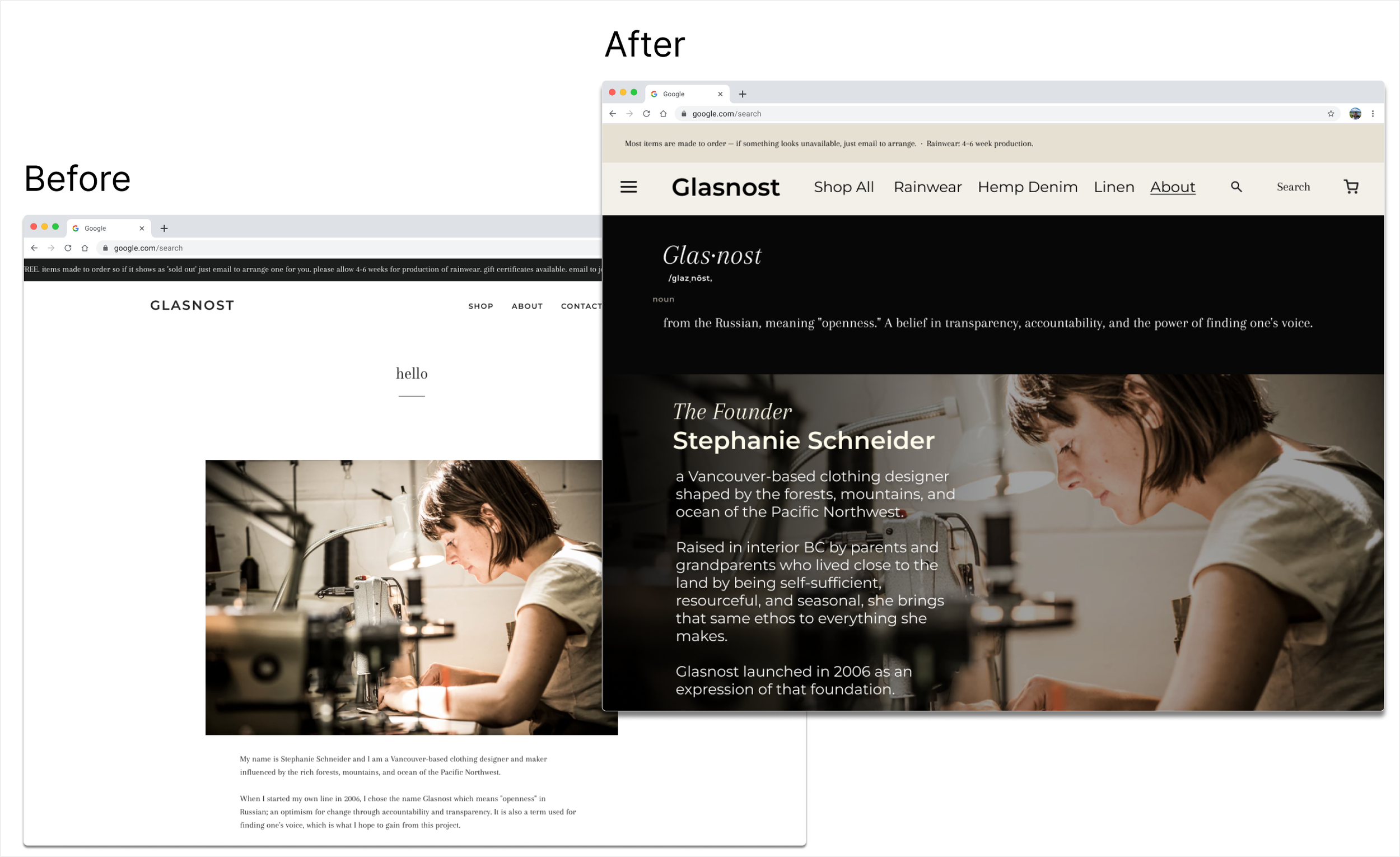
In the about page we focus more on the ethos and creator of the brand and the handmade nature of the work.