
HomeBuddy:
Custom Home Care to Support Aging in Place
Project Type: Vancouver Film School Digital Design Diploma Graduate Project (WIP)
Role: Motion Designer, UX/Product Designer Status: In Development
Did you know? While up to 96% of adults 45 and older agree that aging in place preserves independence and dignity, many face a gap between their desires and practical realities.
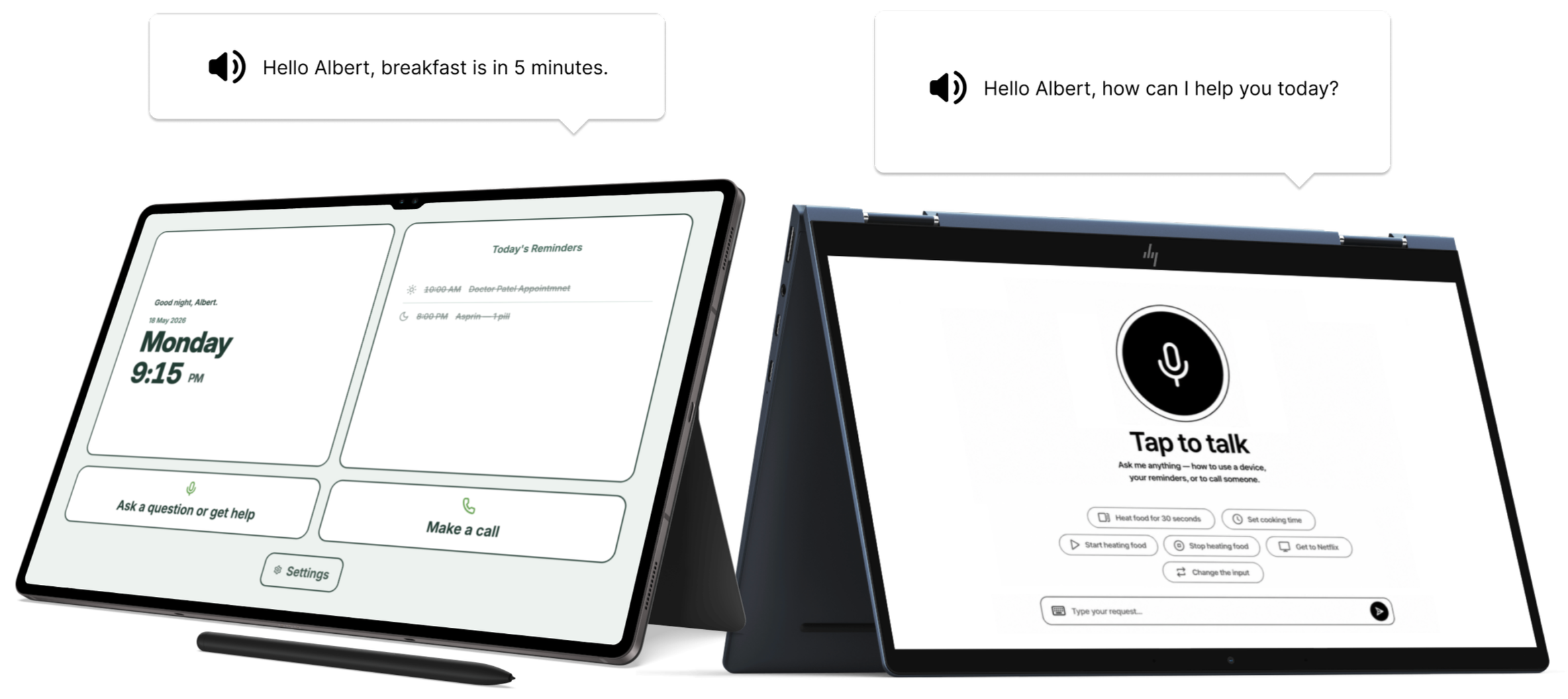
HomeBuddy expands the use of a classic alzhiemers clock to include audio reminders and customized instructions to preserve independance and keep elders oriented within their homes.
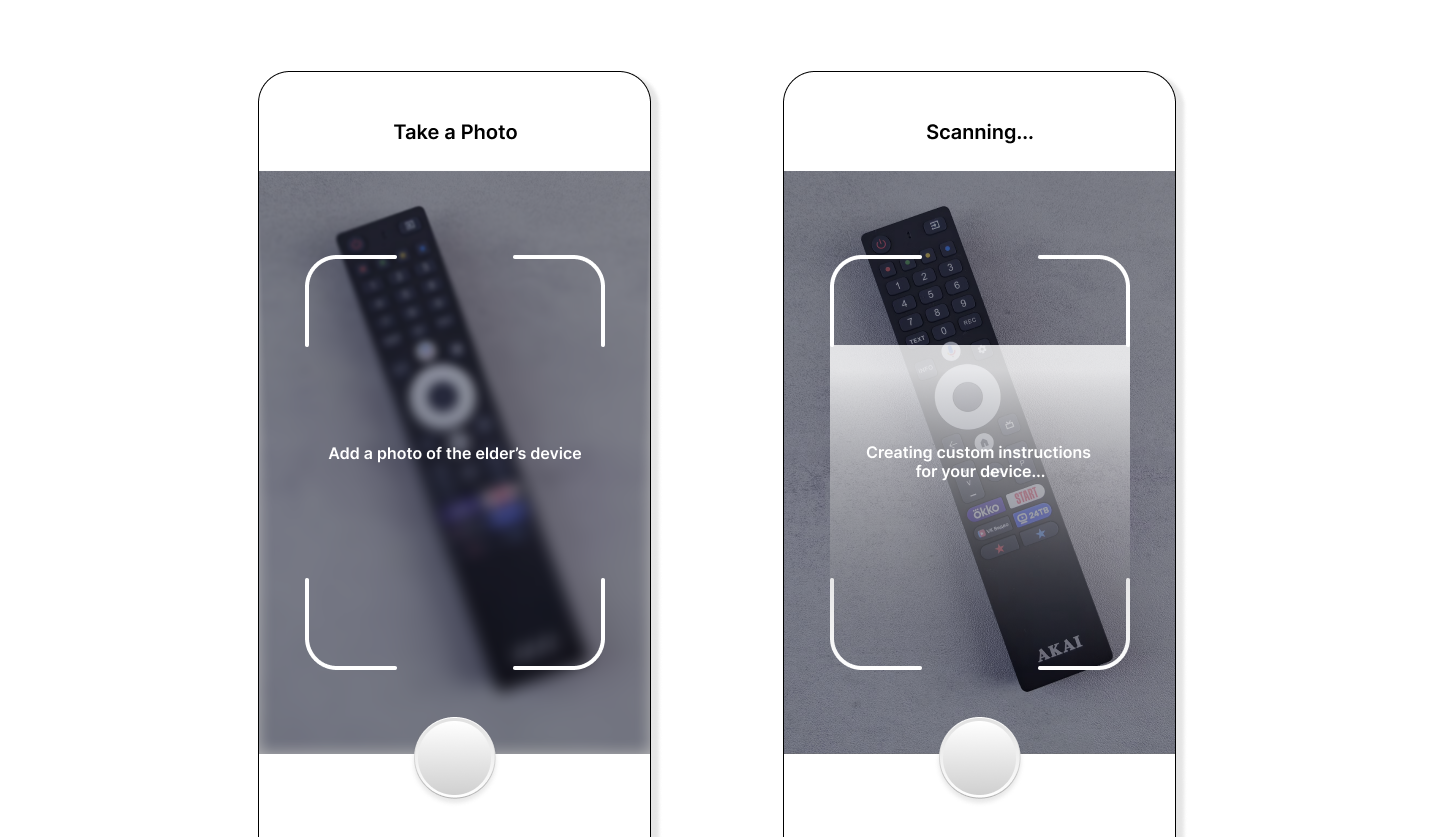
Custom Instructions from your photos:
Point your camera at a remote, an appliance, a label on a bottle.
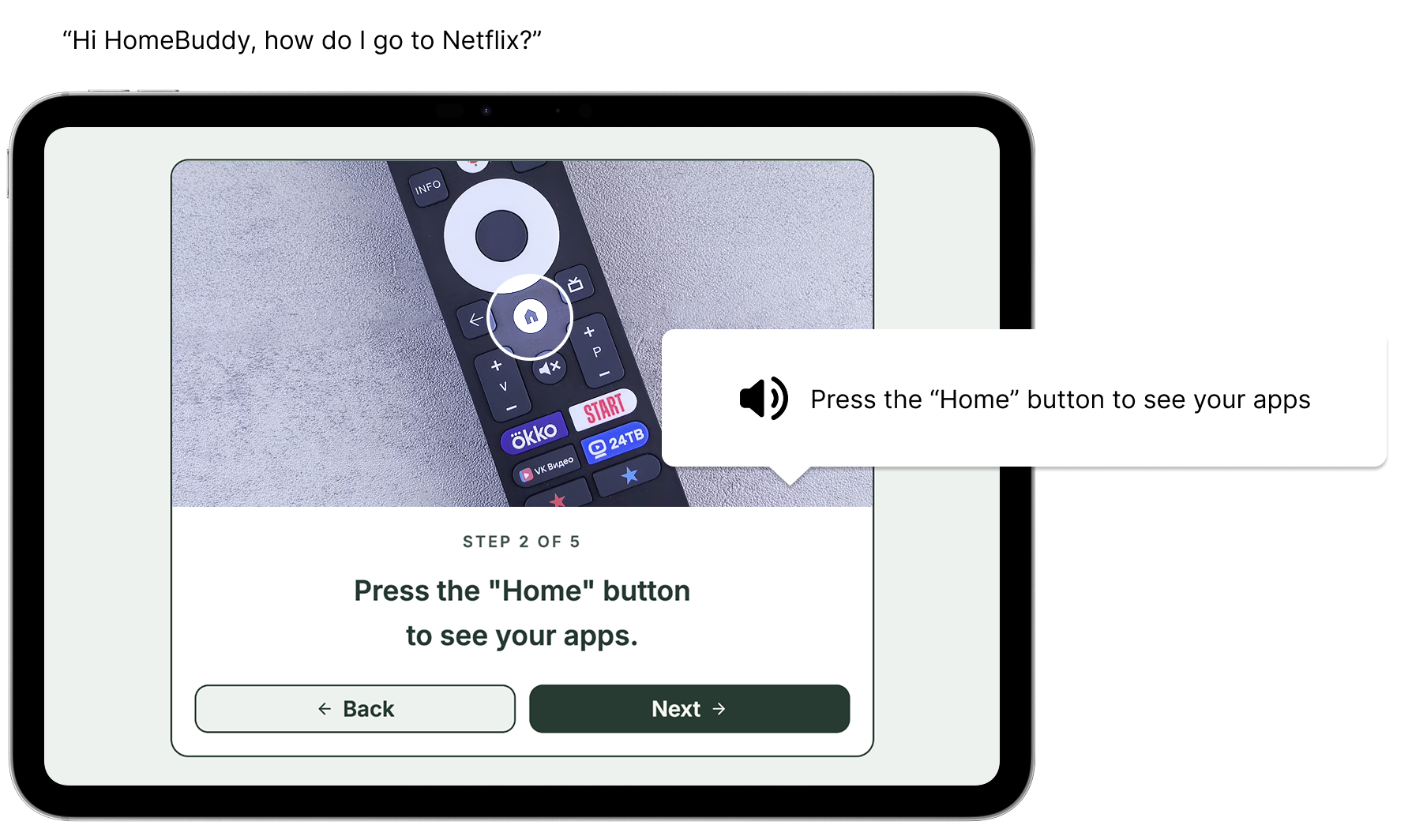
When the elder asks a question they get personalized, step-by-step instructions read out loud.
No searching, no menus. Just a photo, and the next step.
-
When older adults struggle with technology at home, the fix is almost always a phone call. They call a son, a daughter, a neighbour. The person they call talks them through it, or gives up and drives over. The visit that was supposed to be about connection turns into troubleshooting. Again.
This pattern showed up clearly in the research. Robert Merletti, whose parents are in their 80s, described getting calls every couple of weeks about the TV or a smartphone. His mother had been managing well until about a year before the interview. Then, gradually, she wasn't. Robert and his sister reset the same problems, on the same cycle, with no way to break it.
Martina, a care assistant, described watching a 96-year-old client lose access to the things she loved, one by one, as her sight failed and the remotes became unreadable. A CD player that read books aloud was the workaround. Not a solution, just a workaround.
The problem is not that older adults can't learn. It's that the systems around them are not built for how they actually work: one step at a time, in plain language, with patience and no assumption of prior knowledge. When they get stuck mid-task, they often restart from the beginning rather than ask for help. They don't want to be a burden.
That's the problem HomeBuddy was designed to address.
-
HomeBuddy is built around two people: Albert, an older adult who lives independently and values that independence above almost everything, and Markus, his adult son, whose visits keep getting eaten up by tech support.
The product can be used on a mounted tablet device or computer, and has print functionality. There is also a wearable device concept designed for on-the-go assistance.
The core premise is simple: Markus sets things up once, and Albert never has to think about the setup. Reminders run automatically. Task guides are ready when he needs them. When something goes wrong, help comes in one step at a time, by voice, without Albert having to navigate menus or explain what's wrong.
-
Reminders
Reminders are delivered by voice at the scheduled time. Albert doesn't set them or dismiss them in any complicated way. A gentle prompt plays. If he acknowledges it, the reminder closes. If he doesn't respond, it tries once more, calmly. Markus sees a quiet activity log showing whether reminders were acknowledged, not a stack of alerts.
AI Camera Instructions
When Albert needs help with a task, he can describe what he's looking at or take a photo of it. HomeBuddy reads the scene and gives him step-by-step instructions through audio and on-screen text. One step at a time. No step count visible. The instructions are personalised to the specific device in front of him, not a generic guide pulled from a database.
HomeBuddy is a work in progress with a stretch goal of incorporation of a wearable audio device.
This project is for the VFS Digital Design program and has a completion date of August 1st.